


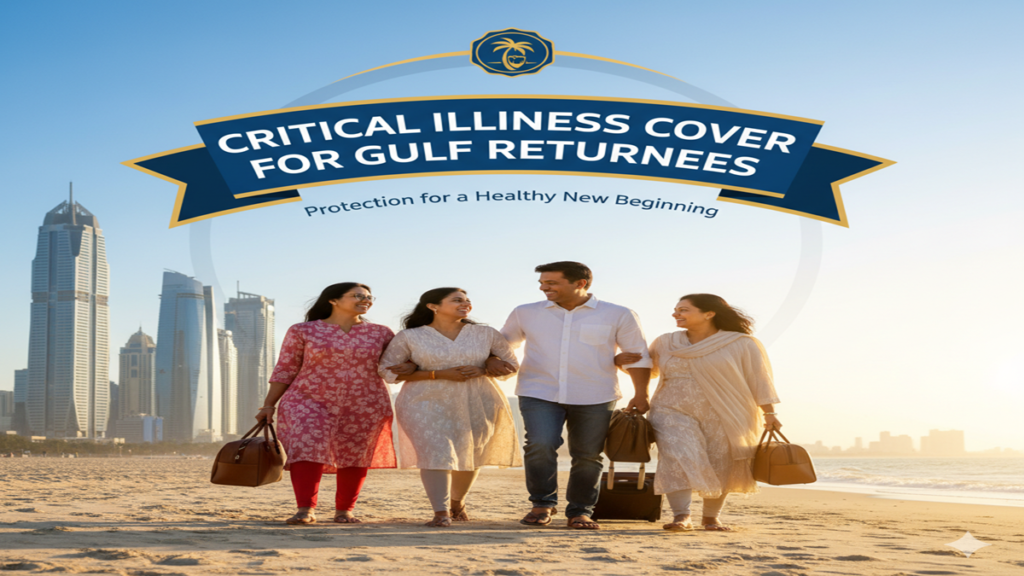
Critical Illness Cover For Gulf Returnees 2026: गल्फ से लौटने वालों के लिए क्यों जरूरी है क्रिटिकल इलनेस कवर? जानिए टॉप प्लान और फायदे!
Critical Illness Cover For Gulf Returnees 2026: Introduction: सालों तक खाड़ी देशों (Gulf Countries) की चिलचिलाती धूप में कड़ी मेहनत करने के बाद, जब एक प्रवासी भारतीय (NRI) अपने वतन वापस लौटता है, तो उसका सपना एक शांत और सुरक्षित जीवन जीने का होता है। लेकिन अक्सर बदलती जीवनशैली, काम का तनाव और जलवायु परिवर्तन की वजह से गंभीर बीमारियां (जैसे कैंसर, किडनी फेलियर, या हार्ट अटैक) दस्तक दे देती हैं।
भारत में चिकित्सा खर्च (Medical Inflation) जिस तेजी से बढ़ रहा है, वह आपकी पूरी उम्र की बचत को कुछ ही हफ्तों में खत्म कर सकता है। इसीलिए, “Critical Illness Cover For Gulf Returnees” आज के समय की एक अनिवार्य जरूरत बन गया है। इस लेख में हम समझेंगे कि एक साधारण हेल्थ इंश्योरेंस और क्रिटिकल इलनेस कवर में क्या अंतर है और गल्फ से लौटने वालों के लिए सबसे अच्छे विकल्प कौन से हैं।
1. क्रिटिकल इलनेस कवर क्या है? (What is it?)
Critical Illness Cover For Gulf Returnees 2026: साधारण हेल्थ इंश्योरेंस केवल अस्पताल के बिलों का भुगतान करता है। इसके विपरीत, Critical Illness Cover एक ‘फिक्स्ड बेनिफिट’ प्लान है। यदि पॉलिसीधारक को पॉलिसी में शामिल किसी गंभीर बीमारी (जैसे स्ट्रोक, कैंसर, या पैरालिसिस) का पता चलता है, तो बीमा कंपनी एकमुश्त (Lump Sum) राशि का भुगतान करती है।
- गल्फ रिटर्नीज़ के लिए महत्व: विदेश से आने के बाद यदि कोई गंभीर बीमारी होती है, तो यह राशि न केवल इलाज में काम आती है, बल्कि आय बंद होने की स्थिति में परिवार के खर्च और बच्चों की शिक्षा में भी मदद करती है।
2. गल्फ रिटर्नीज़ को इस कवर की जरूरत क्यों है?
- लाइफस्टाइल में बदलाव: खाड़ी देशों से भारत लौटने पर खान-पान और वातावरण में बदलाव से स्वास्थ्य संबंधी जोखिम बढ़ जाते हैं।
- आय का अभाव: वापस लौटने के बाद अक्सर तुरंत कोई बड़ा बिजनेस या नौकरी शुरू नहीं हो पाती, ऐसे में बड़ा मेडिकल खर्च बोझ बन जाता है।
- वेटिंग पीरियड (Waiting Period): भारत आने के बाद यदि आप नई पॉलिसी लेते हैं, तो पुरानी बीमारियों के लिए 2-4 साल का इंतजार करना पड़ता है। क्रिटिकल इलनेस कवर इस जोखिम को कम करने में मदद करता है।
3. टॉप 3 क्रिटिकल इलनेस प्लान 2026 (Top Plans)
Critical Illness Cover For Gulf Returnees 2026: गल्फ से लौटने वालों के लिए ये तीन कंपनियां सबसे विश्वसनीय मानी जा रही हैं:
- Care Health ‘Critical Mediclaim’: यह 32 गंभीर बीमारियों को कवर करता है और इसमें अस्पताल में भर्ती होने की जरूरत के बिना भी क्लेम मिल जाता है।
- Star Health ‘Critical Illness Multipay’: यह उन लोगों के लिए बेस्ट है जो एक से अधिक गंभीर बीमारियों के खिलाफ सुरक्षा चाहते हैं। केरल के प्रवासियों में यह बहुत लोकप्रिय है।
- HDFC Ergo ‘Critical Suraksha’: इसका क्लेम सेटलमेंट रेशियो बहुत अधिक है और इसमें डायग्नोसिस होते ही पैसे मिल जाते हैं।
4. पॉलिसी चुनते समय इन बातों का रखें ध्यान (Buying Guide)
- बीमारियों की संख्या: सुनिश्चित करें कि आपकी पॉलिसी में कम से कम 30-35 प्रमुख बीमारियां शामिल हों।
- सरवाइवल पीरियड (Survival Period): आमतौर पर, बीमारी का पता चलने के बाद 30 दिन तक जीवित रहने पर ही क्लेम मिलता है। कम सरवाइवल पीरियड वाली पॉलिसी चुनें।
- प्रीमियम और कवरेज: गल्फ से लौटने के बाद अपनी बचत के हिसाब से ऐसा प्रीमियम चुनें जो आपकी जेब पर भारी न पड़े।
- Norka Roots के साथ तालमेल: यदि आप केरल से हैं, तो नोर्का (Norka) के फायदों के साथ-साथ एक प्राइवेट क्रिटिकल इलनेस कवर जरूर रखें।
5. 2026 में क्लेम की प्रक्रिया (Claim Process)
Critical Illness Cover For Gulf Returnees 2026: 2026 में अब क्लेम करना बहुत आसान हो गया है। आपको केवल डॉक्टर की रिपोर्ट और डायग्नोसिस सर्टिफिकेट को इंश्योरेंस कंपनी के ऐप पर अपलोड करना होता है। जांच के बाद, पैसा सीधे आपके बैंक खाते में आ जाता है, जिसका उपयोग आप कहीं भी कर सकते हैं।
4. अक्सर पूछे जाने वाले प्रश्न (FAQs)
Q1: क्या मुझे हेल्थ इंश्योरेंस के साथ अलग से क्रिटिकल इलनेस कवर लेना चाहिए?
Ans: हाँ, क्योंकि हेल्थ इंश्योरेंस केवल अस्पताल के खर्च देता है, जबकि क्रिटिकल इलनेस कवर आपको एक बड़ी राशि देता है जिससे आप घर का खर्च और अन्य देनदारियां पूरी कर सकते हैं।
Q2: क्या विदेश में हुई बीमारी का क्लेम भारत में मिल सकता है?
Ans: यह आपकी पॉलिसी के नियमों पर निर्भर करता है। ‘Global Cover’ वाली पॉलिसियां विदेश में भी कवरेज देती हैं, लेकिन गल्फ रिटर्नीज़ के लिए भारतीय पॉलिसी लेना ही सबसे किफायती है।
Q3: क्या स्मोकर्स (Smokers) को भी यह कवर मिल सकता है?
Ans: हाँ, लेकिन स्मोकर्स के लिए प्रीमियम की दरें थोड़ी अधिक हो सकती हैं।
Conclusion: सुरक्षित वापसी, सुरक्षित कल!
Critical Illness Cover For Gulf Returnees केवल एक बीमा पॉलिसी नहीं है, बल्कि यह आपकी सालों की मेहनत की कमाई की रक्षा करने वाली एक ढाल है। गल्फ से लौटने के बाद स्वास्थ्य संबंधी अनिश्चितताएं बढ़ सकती हैं, लेकिन एक सही बीमा कवर आपको और आपके परिवार को हर मुश्किल घड़ी में आर्थिक रूप से मजबूत बनाए रखेगा। आज ही अपने और अपने परिवार के लिए सही प्लान चुनें।
Introduction
Critical Illness Cover For Gulf Returnees The decision to return home after years of working in the Gulf Cooperation Council (GCC) countries is a significant life transition. While it often brings emotional relief and family reunification, it also introduces new financial challenges, particularly concerning healthcare. Gulf returnees—whether returning to India, Pakistan, Egypt, the Philippines, or other nations—face a critical gap in health security.
Critical Illness Cover For Gulf Returnees 2026: Employer-provided medical insurance, a staple of expatriate contracts in the GCC, ceases upon departure. This loss of coverage, coupled with the rising prevalence of lifestyle diseases and the often-inadequate public healthcare infrastructure in home countries, creates a pressing need for proactive financial planning. Critical Illness Cover emerges not as a luxury, but as an essential pillar of financial resilience for the returning expatriate.
Section 1: The Unique Healthcare Vulnerability of Gulf Returnees
Critical Illness Cover For Gulf Returnees 2026: Gulf returnees are a unique demographic with specific risk profiles:
- The Coverage Cliff: The most immediate shock is the abrupt end of comprehensive, employer-sponsored health insurance. This coverage, often taken for granted, includes outpatient, inpatient, and sometimes even medical evacuation. Returning home means facing healthcare costs out-of-pocket until new arrangements are made.
- Lifestyle and Onset of Critical Illnesses: The expatriate lifestyle in the Gulf, while lucrative, can be taxing. Long working hours, high stress, sedentary routines, and dietary changes contribute to health risks. Many returnees are in their 40s and 50s—the prime age for the onset of critical illnesses like heart attacks, strokes, cancer, and organ failures. The financial impact of such an event without insurance can be catastrophic.
- Gap in Domestic Health Insurance: While many home countries have health insurance options, they often come with limitations:
- Sub-limits and Co-pays: Policies may cap room rents or specific treatment costs.
- Exclusion of Pre-existing Conditions: Any ailment developed or noticed in the Gulf might be excluded.
- Lack of Comprehensive Critical Illness Coverage: Standard health insurance reimburses hospitalization bills. It does not provide a lump-sum payout for non-hospitalization costs associated with a critical illness, such as loss of income, experimental treatments, home modifications, or travel for specialized care.
- The Financial Double Whammy: A critical illness affects not just medical bills but also earning capacity. Just as the returnee is rebuilding their career or business in their home country, an illness can halt income entirely, depleting the hard-earned Gulf savings meant for retirement, children’s education, or housing.
Section 2: Critical Illness Cover: The Financial Lifeline
Critical Illness Cover For Gulf Returnees 2026: Critical Illness Insurance is a fixed-benefit, lump-sum insurance policy. Upon the first diagnosis of any of the covered illnesses (typically ranging from 15 to 40+ conditions), the insurer pays the entire sum insured directly to the policyholder, tax-free.
Why is this lump-sum crucial for a returnee?
- Income Replacement: It compensates for lost income, allowing the individual to focus on recovery without the pressure to return to work prematurely.
- Covers Non-Medical Costs: It pays for travel to advanced medical centers, alternative therapies, home nursing care, child care, and daily living expenses.
- Fills Gaps in Health Insurance: It provides funds for treatments not fully covered by standard insurance or for expensive drugs.
- Psychological Peace: The assurance of a financial buffer reduces stress, which is itself a vital component of healing.
Section 3: Strategic Considerations for Gulf Returnees
Critical Illness Cover For Gulf Returnees 2026: Purchasing a Critical Illness policy requires careful, context-specific planning.
A. Timing: The Golden Window
The best time to purchase is before leaving the Gulf. Applying while still employed offers several advantages:
- Demonstrable Income: Your GCC salary slip serves as clear proof of high income, enabling you to secure a higher, more appropriate sum insured.
- Better Health Profile: Insurers may perceive you as being in a better healthcare environment, potentially simplifying medical underwriting.
- Avoiding the Coverage Gap: The policy can be initiated with your home country as the base, ensuring no lapse in your financial safety net from day one of return.
B. Determining the Sum Insured: The Gulf Savings Lens
Critical Illness Cover For Gulf Returnees 2026: The lump sum should be substantial. A common formula is:
Sum Insured = (Annual Income x 2) + Estimated Additional Expenses
For a returnee, this should also factor in a portion of their Gulf savings they wish to protect from being eroded by medical costs. A sum of $100,000 to $250,000 (or equivalent) is often recommended, not just local currency amounts.
C. Key Policy Features to Scrutinize
- List of Covered Illnesses: Ensure it includes major conditions like cancer (of specified severity), coronary artery bypass surgery, heart attack, stroke, kidney failure, and major organ transplants.
- Survival Period: The number of days (typically 14-30) the insured must survive after diagnosis to claim. Shorter is better.
- Payout Structure: Opt for policies that pay 100% of the sum insured upon first diagnosis of any major illness. Beware of policies that split the sum across different illnesses.
- Premium Waiver Benefit: A rider that ensures all future premiums are waived if a critical illness is diagnosed, keeping the policy (and possibly other linked benefits) alive.
- Return of Premium Option: While costlier, this rider returns all premiums paid at the end of the term if no claim is made. It can be attractive for those who see insurance as a potential savings corpus.
- Critical Illness Cover For Gulf Returnees 2026: Global Coverage: Ensure the policy provides coverage worldwide, especially if you plan to seek treatment abroad or return to the Gulf for work.
Section 4: The Acquisition Process: Steps for the Returnee
- Critical Illness Cover For Gulf Returnees 2026: Research (3-6 Months Before Return): Start researching insurers in your home country that offer robust Critical Illness plans. Use comparison websites and consult with independent financial advisors.
- Critical Illness Cover For Gulf Returnees 2026: Disclosure is Paramount: Fully disclose your complete medical history, including all check-ups, medications, and diagnoses from your time in the Gulf. Non-disclosure is the primary reason for claim rejection.
- Insurers may request medical reports from the Gulf. Your older age at return will make this step mandatory and detailed.
- Critical Illness Cover For Gulf Returnees 2026: Policy Inception: Aim to have the policy start date coincide with or precede your return date. Pay premiums annually to avoid lapse due to administrative hassles during relocation.
Section 5: Integration with Overall Financial Portfolio
Critical Illness Cover For Gulf Returnees 2026: Critical Illness Cover should not stand alone. For the Gulf returnee, it must be part of a triad:
- A Base Health Insurance Policy: For hospitalization bills. Consider a top-up or super top-up plan to enhance coverage cheaply.
- Critical Illness Cover: For the lump-sum, life-altering financial impact.
- Critical Illness Cover For Gulf Returnees 2026: Life Insurance: To provide for dependents in case of the worst outcome.
Many providers offer combinations (e.g., a life insurance policy with a Critical Illness rider). Evaluate standalone vs. bundled options carefully; standalone policies often provide more comprehensive illness coverage.
Conclusion: From Repatriation to Resilience
Critical Illness Cover For Gulf Returnees 2026: Returning from the Gulf is a journey of re-establishment. Financial planning for this phase has traditionally focused on assets—buying a house, investing savings, funding education. However, protecting the health and wealth nexus is more fundamental. A Critical Illness policy is a strategic tool that safeguards the returnee’s most valuable asset: their ability to earn and their Gulf-acquired nest egg. It transforms vulnerability into security, ensuring that a health crisis does not undo a lifetime of hard work abroad. For the prudent Gulf returnee, securing a robust Critical Illness Cover is the final, essential step in a successful repatriation plan, enabling them to build their next chapter with confidence and peace of mind.
FAQs: Critical Illness Cover for Gulf Returnees
1. I am perfectly healthy. Why should I buy Critical Illness Cover immediately upon return?
Critical Illness Cover For Gulf Returnees 2026: Your health today is the best reason to buy. Insurability is based on your current health status. A diagnosis after return, even for a minor condition, can make securing coverage later difficult, expensive, or result in exclusions. Locking in coverage while healthy ensures you have protection when you need it most.
2. Can I purchase a Critical Illness policy from an international or GCC-based insurer after I leave?
Critical Illness Cover For Gulf Returnees 2026: It is possible but often complex. Insurers typically require you to be a resident of the country where the policy is issued. Your best options are insurers in your country of citizenship or permanent residence. Some global insurers offer portable plans, but these are usually premium products. Focus on reputable insurers in your home country.
3. How does Critical Illness Cover differ from the health insurance I had in the Gulf?
Critical Illness Cover For Gulf Returnees 2026: Gulf health insurance is primarily a reimbursement model for medical bills (hospitalization, medication). Critical Illness Cover is a fixed-benefit model. It pays a tax-free lump sum upon diagnosis of a covered illness, regardless of your actual medical bills. You can use this cash for anything: income replacement, travel for treatment, home care, or even paying off debts.
4. Will my policy cover me if I return to the Gulf for work or treatment?
Critical Illness Cover For Gulf Returnees 2026: Most Critical Illness policies from reputable insurers in Asia provide worldwide coverage. This means the diagnosis and claim can happen anywhere. However, you must confirm this explicitly with the insurer before purchase. Ensure the policy wording states it is valid worldwide and not restricted to your home country.
5. I have some pre-existing conditions (like hypertension) managed with medication. Will I get coverage?
Critical Illness Cover For Gulf Returnees 2026: Yes, but with specific terms. Full disclosure is critical. The insurer may:
Load the Premium: Charge you a higher premium.
Impose a Waiting Period: Exclude that specific condition (e.g., heart disease) for an initial period (e.g., 2-4 years).
Offer Cover with Exclusion: Permanently exclude claims related to that condition.
You must still declare it; getting coverage for other illnesses is far better than having a claim denied later for non-disclosure.