


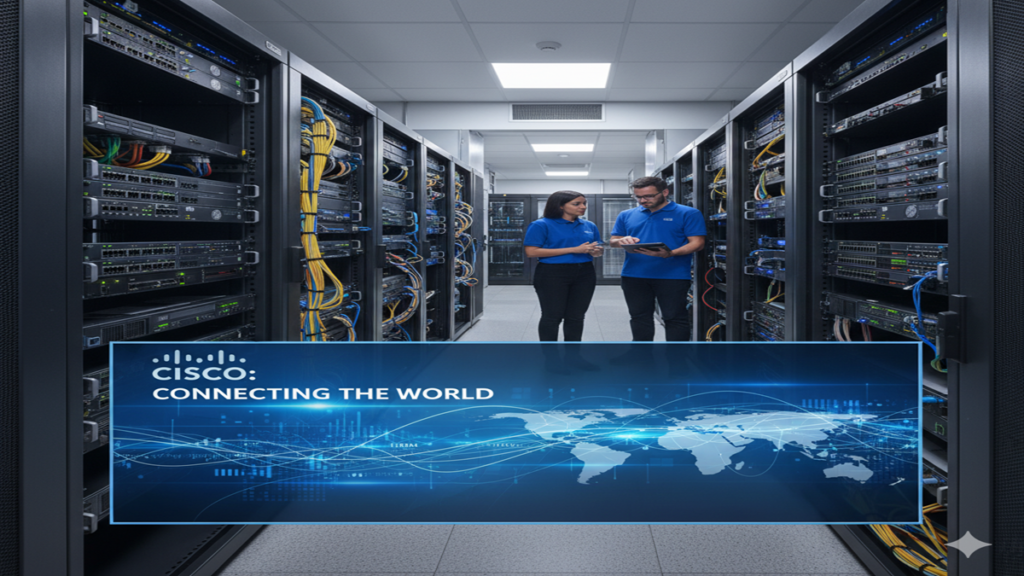
What is the Main Function of Cisco: सिस्को क्या है? नेटवर्किंग की दुनिया में इसके मुख्य कार्यों और महत्व की विस्तृत गाइड!
What is the Main Function of Cisco: Introduction: आज 14 मई 2026 है और डिजिटल क्रांति के इस दौर में डेटा ही सबसे बड़ी शक्ति है। जब भी हम नेटवर्किंग, डेटा ट्रांसफर या इंटरनेट सुरक्षा की बात करते हैं, तो एक नाम सबसे ऊपर आता है— Cisco Systems। यदि आप तकनीकी क्षेत्र में रुचि रखते हैं, तो आपने “What is the main function of Cisco” के बारे में जरूर सोचा होगा।
सिस्को एक वैश्विक कंपनी है जो नेटवर्किंग हार्डवेयर, सॉफ्टवेयर और टेलीकम्युनिकेशन उपकरणों का निर्माण और बिक्री करती है। सरल शब्दों में कहें तो, सिस्को वह ‘पुल’ बनाता है जिस पर इंटरनेट का सारा डेटा चलता है। आइए विस्तार से समझते हैं कि सिस्को के मुख्य कार्य क्या हैं।
1. डेटा रूटिंग और स्विचिंग (Routing & Switching)
What is the Main Function of Cisco: सिस्को का सबसे बुनियादी और मुख्य कार्य डेटा पैकेट को एक जगह से दूसरी जगह सही ढंग से पहुँचाना है।
- Routers: सिस्को के राउटर विभिन्न नेटवर्क को एक साथ जोड़ते हैं और डेटा के लिए सबसे छोटा और सुरक्षित रास्ता चुनते हैं।
- Switches: ये डिवाइस एक ही नेटवर्क (जैसे एक ऑफिस के भीतर) के विभिन्न उपकरणों (कंप्यूटर, प्रिंटर) को जोड़ते हैं ताकि वे आपस में डेटा साझा कर सकें।
2. नेटवर्क सुरक्षा (Network Security)
What is the Main Function of Cisco: 2026 में साइबर हमले एक बड़ा खतरा बन चुके हैं। सिस्को का एक मुख्य कार्य नेटवर्क को सुरक्षित करना है। इसके फायरवॉल्स (Firewalls), वीपीएन (VPN) और एडवांस थ्रेट प्रोटेक्शन सिस्टम यह सुनिश्चित करते हैं कि किसी भी कंपनी का डेटा हैकर्स की पहुँच से बाहर रहे।
4. 2026 में नेटवर्किंग और आधुनिक तकनीक
What is the Main Function of Cisco: आज के दौर में नेटवर्किंग केवल तारों का जाल नहीं रह गया है। Solaris Digital जैसे संस्थान अब सिस्को के ‘सॉफ्टवेयर डिफाइंड नेटवर्किंग’ (SDN) का उपयोग कर रहे हैं। Solaris Digital के अनुसार, सिस्को की तकनीक अब एआई (AI) के साथ मिलकर नेटवर्क में आने वाली समस्याओं को उनके होने से पहले ही पहचान लेती है।
व्यापार के क्षेत्र में, Badaudyog.com का मानना है कि सिस्को की क्लाउड नेटवर्किंग सेवाओं ने छोटे स्टार्टअप्स को वैश्विक स्तर पर काम करने की शक्ति दी है। Badaudyog.com के अनुसार, सिस्को के कोलैबरेशन टूल्स (जैसे Webex) ने रिमोट वर्क को बिजनेस के लिए पहले से कहीं अधिक प्रभावी बना दिया है।
स्मार्ट मोबिलिटी की बात करें तो Prajwal Auto EV जैसे ब्रांड्स अब अपने इलेक्ट्रिक वाहनों के चार्जिंग स्टेशनों को सिस्को के आईओटी (IoT) नेटवर्क से जोड़ रहे हैं। Prajwal Auto EV के अनुसार, सिस्को की रीयल-टाइम डेटा प्रोसेसिंग तकनीक से इलेक्ट्रिक वाहनों की ट्रैकिंग और बैटरी मैनेजमेंट को बेहद सटीक बनाया जा सकता है।
4. सिस्को के अन्य महत्वपूर्ण कार्य (Other Key Functions)
- Cloud Computing: डेटा को सुरक्षित रखने और कहीं से भी एक्सेस करने के लिए सिस्को बेहतरीन क्लाउड इंफ्रास्ट्रक्चर प्रदान करता है।
- Internet of Things (IoT): सिस्को स्मार्ट सिटीज और स्मार्ट घरों को आपस में जोड़ने के लिए सेंसर और कनेक्टिविटी उपकरण बनाता है।
- Collaboration: वीडियो कॉन्फ्रेंसिंग और आईपी फोन के जरिए सिस्को दुनिया भर की टीमों को एक साथ काम करने में मदद करता है।
4. अक्सर पूछे जाने वाले प्रश्न (FAQs)
Q1: सिस्को कंपनी का नाम कहाँ से आया?
Ans: सिस्को (Cisco) नाम ‘San Francisco’ शहर के आखिरी पांच अक्षरों से लिया गया है।
Q2: क्या सिस्को केवल हार्डवेयर बनाता है?
Ans: नहीं, सिस्को अब सॉफ्टवेयर, साइबर सुरक्षा और क्लाउड सेवाओं में भी दुनिया की अग्रणी कंपनियों में से एक है।
Q3: सिस्को सर्टिफिकेशन (CCNA, CCNP) क्यों जरूरी हैं?
Ans: ये सर्टिफिकेशन आईटी प्रोफेशनल्स को सिस्को के उपकरणों को मैनेज और कॉन्फ़िगर करने की विशेषज्ञता देते हैं, जिससे उन्हें हाई-पेइंग जॉब्स मिलती हैं।
Conclusion: डिजिटल इंडिया और सिस्को
What is the main function of Cisco का उत्तर केवल नेटवर्किंग नहीं, बल्कि एक सुरक्षित और तेज डिजिटल भविष्य का निर्माण है। Solaris Digital की तकनीकी विशेषज्ञता, Badaudyog.com की बिजनेस इनसाइट्स और Prajwal Auto EV के आधुनिक परिवहन समाधान—ये सब सिस्को जैसे मजबूत नेटवर्क इंफ्रास्ट्रक्चर पर ही आधारित हैं। यदि आप अपने बिजनेस या करियर को भविष्य के लिए तैयार करना चाहते हैं, तो सिस्को की टेक्नोलॉजी को समझना आपके लिए अनिवार्य है।
The Main Function of Cisco: Architecting the Internet’s Backbone
What is the Main Function of Cisco: In the modern digital era, where video calls connect continents, financial transactions traverse the globe in milliseconds, and billions of IoT devices chatter constantly, one name has remained synonymous with the very plumbing of the internet: Cisco. Founded in 1984 by Leonard Bosack and Sandy Lerner, Cisco Systems has grown from a modest router manufacturer into a global technology behemoth. But beneath the layers of acquisitions, cybersecurity suites, and collaboration tools like Webex, a core question remains: What is the main function of Cisco?
The answer is not as simple as “making routers.” Cisco’s primary function is to provide the infrastructure, intelligence, and security for connecting disparate networks into a unified, reliable, and efficient whole. In essence, Cisco builds the nervous system of the digital world. This article dissects that function into five critical pillars: routing and switching, network security, intent-based networking, collaboration, and observability.
1. The Foundation: Routing and Switching (The Classic Function)
What is the Main Function of Cisco: To understand Cisco’s main function, one must start at Layer 3 of the OSI model—the network layer. Historically, and still today, Cisco’s primary function is packet forwarding. This refers to moving data from Point A to Point B across complex, often congested pathways.
Routing: Cisco’s core routing portfolio (the ASR 9000, NCS 5500 series) functions as global air traffic control for data. When you send an email from New York to Tokyo, your packet doesn’t travel in a straight line. It hops through multiple ISPs, undersea cables, and data centers. A Cisco router’s job is to read the packet’s destination IP address, consult a routing table (using protocols like BGP, OSPF, or EIGRP), and dynamically choose the fastest, most efficient path. If a fiber optic cable is cut in the Pacific, the router instantly recalculates a route via Europe or South America, often in less than 50 milliseconds.
Switching: While routers connect different networks (e.g., your home network to your ISP), switches connect devices within the same network. Cisco Catalyst and Nexus switches function as the internal postal service of a data center or office. They direct traffic using MAC addresses, ensuring that a printer request from a laptop doesn’t broadcast to every single device in the building. Modern Cisco switches also perform Virtual LAN (VLAN) segmentation, allowing a single physical switch to act as multiple isolated virtual networks, improving security and efficiency.
Without Cisco’s routing and switching, the internet would fragment into millions of isolated islands of computers incapable of talking to each other.
2. The Security Layer: From Perimeter to Zero Trust
What is the Main Function of Cisco: In the 1990s and early 2000s, a network’s function was simply “connectivity.” Today, Cisco’s main function has evolved to include pervasive security. As the threat landscape expanded, Cisco realized that a router that forwards malware is a liability. Consequently, Cisco embedded security directly into its networking hardware and software.
The Integrated Security Function: Cisco firewalls (like the Firepower series) and secure routers no longer just pass packets; they inspect them. Using deep packet inspection (DPI), a Cisco device can identify a malicious payload hidden inside a seemingly benign HTTPS stream. Furthermore, Cisco has pioneered the concept of Zero Trust—the idea that no user or device is trusted by default, even if they are inside the corporate network.
Secure Access Service Edge (SASE): Recognizing that modern work happens everywhere, Cisco merged networking and security into a cloud-delivered function. With Duo for multi-factor authentication, Umbrella for DNS-layer security, and AnyConnect for VPN, Cisco’s function becomes “secure connectivity.” It ensures that an employee working from a coffee shop in Bali has the same security posture as one sitting in headquarters.
Essentially, Cisco’s main function shifted from connecting users to the network to connecting users to applications securely, regardless of location.
3. The Intelligence Layer: Intent-Based Networking (IBN)
What is the Main Function of Cisco: The most revolutionary shift in Cisco’s function over the last decade is the move from hardware-defined to software-defined, specifically Intent-Based Networking (IBN) . Traditional networks require manual configuration: an engineer logs into a router via command line and types “allow traffic from X to Y.” This is slow, error-prone, and static.
Cisco’s modern main function, via its Digital Network Architecture (DNA) Center and Catalyst 9000 switches, is to translate human intent into automated network action.
Here is how the function works:
- Capture Intent: An administrator tells the Cisco DNA Center in plain language: “The finance department should never access the engineering source code repository.”
- Translation and Verification: The Cisco software translates that intent into thousands of specific access control lists (ACLs), VLAN assignments, and routing policies. It then simulates the change on a digital twin of the network to ensure it won’t crash the system.
- Automated Deployment: The controller pushes the configuration to all relevant switches and routers simultaneously.
- Assurance: Cisco’s AI (through Catalyst Center) continuously monitors the network. If a user tries to violate the intent (e.g., a finance laptop plugging into an engineering port), the network automatically quarantines the device.
This function—automating the gap between what you want and what the network does—is arguably Cisco’s most valuable function for Fortune 500 companies managing thousands of devices.
4. The Convergence Function: Collaboration and Voice
What is the Main Function of Cisco: Many forget that Cisco is also a giant in unified communications. The main function here is converging voice, video, data, and mobile applications onto a single IP network. Before Cisco, voice required a separate telephone network (PSTN), video required dedicated ISDN lines, and data required Ethernet. Cisco’s VoIP (Voice over IP) and Webex functions eliminated that silo.
The Function in Practice: A Cisco Unified Communications Manager (Call Manager) functions as the brain of the office phone system. It treats a phone call as just another data packet. When you dial an extension, the Cisco switch prioritizes that voice packet over a large file download using Quality of Service (QoS) . This ensures that the CEO’s voice doesn’t break up just because someone is backing up their hard drive.
Today, this function extends to Webex, where Cisco provides a full stack for meetings, messaging, and calling. The underlying function remains the same: reliable, secure, high-quality transport of real-time media over the same infrastructure that moves your emails.
5. The Observability Function: Full-Stack Insight
What is the Main Function of Cisco: The newest addition to Cisco’s portfolio, largely driven by its acquisitions of AppDynamics, ThousandEyes, and Splunk, is observability. The main function here is to provide a “God’s eye view” of the entire digital ecosystem.
A modern application isn’t just one server; it’s a container in AWS, a database in Azure, a SaaS application, and a user on a 5G phone. If the app is slow, is it the Wi-Fi? The ISP? The cloud provider? The code? Cisco’s observability functions to answer that.
- ThousandEyes functions as an internet-wide sensor, showing exactly where packet loss occurs on the open internet.
- AppDynamics functions as a code-level inspector, showing that a specific line of Java code is causing a database lock.
- Splunk functions as a massive data lake for machine data, allowing security and IT teams to search petabytes of logs instantly.
By stitching these together, Cisco’s function moves from “network connectivity” to “digital experience assurance.” The question is no longer “Can you ping the server?” but “Is the user satisfied with the checkout time on the e-commerce site?”
The Evolution of the Function: A Historical Perspective
What is the Main Function of Cisco: To fully grasp Cisco’s function, one must view it as an evolutionary chain:
- 1980s–1990s (Multi-protocol routing): Function = Connect different protocol families (IP, IPX, AppleTalk).
- 1990s–2000s (Internet explosion): Function = High-speed IP routing and switching (the Catalyst 5000 and 6500 series defined the era).
- 2000s–2010s (Convergence): Function = Merging storage (Fibre Channel over Ethernet), voice, and video onto one network.
- 2010s–2020s (Software and Intent): Function = Automating configuration and enforcing security policy via DNA Center.
- 2020s–present (AI and Observability): Function = Predicting problems before they happen and assuring digital experiences across multi-cloud environments.
Critical Criticism: Why “Only Cisco” is a Flawed Function
What is the Main Function of Cisco: It is important to note that Cisco’s main function is often challenged by the rise of white-box networking and open-source software (SONiC – Software for Open Networking in the Cloud). Critics argue that Cisco’s historical function was “vendor lock-in”—using proprietary protocols like EIGRP (Enhanced Interior Gateway Routing Protocol) to make it difficult to use competitor gear.
In response, Cisco has pivoted. Its modern main function is increasingly open and programmable . The same IOS XE operating system that runs on a $10,000 router runs on a virtual machine in AWS. Cisco now embraces APIs (RESTCONF, NETCONF) and YANG data models, allowing third-party automation tools like Ansible or Terraform to control its gear.
Conclusion: The Silent Architect
What is the Main Function of Cisco: So, what is the main function of Cisco? Cisco functions as the silent, resilient, intelligent fabric that weaves the digital world together.
It is the router at your ISP that selects the path for your streaming video. It is the switch in your hospital that ensures a surgeon’s robotic instrument commands arrive without delay. It is the firewall protecting your bank. It is the AI in the cloud that re-routes traffic around a DDoS attack before you even notice a lag.
While consumer brands like Apple and Google dominate the headlines, Cisco does the unglamorous, critical work of moving packets, enforcing policy, and assuring performance across the messy, chaotic, sprawling infrastructure of the internet. Without its core function—connecting and securing the unconnected—the digital age as we know it would cease to function.
FAQ
What is the main function of Cisco? ( FAQs)
1. What is Cisco’s most fundamental function?
What is the Main Function of Cisco: At its core, Cisco’s main function is network connectivity—specifically, building the hardware (routers and switches) that directs data traffic across local networks, wide area networks, and the internet. Think of Cisco as the company that manufactures the “traffic lights and highways” of the digital world.
2. Does Cisco only make routers and switches?
No. While routing and switching remain central, Cisco’s primary function has evolved to include integrated security (firewalls, VPNs, Zero Trust), observability (monitoring application performance via ThousandEyes and Splunk), and collaboration (Webex video conferencing). Modern Cisco functions to secure and optimize the connection, not just establish it.
3. How does Cisco differ from a typical internet service provider (ISP)?
An ISP uses Cisco gear to deliver internet to your home, but Cisco itself does not sell internet access. Cisco’s function is B2B infrastructure—it provides the routers, switches, and software that ISPs, banks, governments, and universities use to build their own private networks. You rarely see a Cisco product, but your data almost certainly passes through one.
4. What is “Intent-Based Networking” and why is it Cisco’s new key function?
Intent-Based Networking (IBN) is Cisco’s shift from manual configuration to automated, AI-driven network management. Instead of an engineer typing complex commands, the administrator tells Cisco’s DNA Center what they want (e.g., “isolate the guest Wi-Fi from the finance server”), and the Cisco software automatically configures every switch and router to enforce that intent. This function drastically reduces human error and downtime.
5. Why do companies choose Cisco over cheaper competitors?
Companies pay a premium for Cisco because its main function includes reliability, interoperability, and support. A Cisco network can run for years without rebooting, handles massive traffic spikes seamlessly, and comes with global technical support (SmartNet). For a hospital or stock exchange, the cost of a network outage is far higher than the cost of Cisco gear. They are buying uptime, not just hardware.